Artistry in Curved Brick Architecture
Curved brick structures are gaining attention for their unique designs and aesthetic appeal. This overview highlights several notable projects where brickwork takes on fluid forms, showcasing the creativity of contemporary architects and enhancing community interactions. The trend reflects a shift in architectural thinking, moving away from rigid, box-like structures to more organic forms that encourage both visual and experiential engagement. Architects are increasingly exploring how materials like brick can be manipulated, holding the potential to redefine spaces where people live, work, and gather.
Twisted Brick Shell Library, Longyou County, China
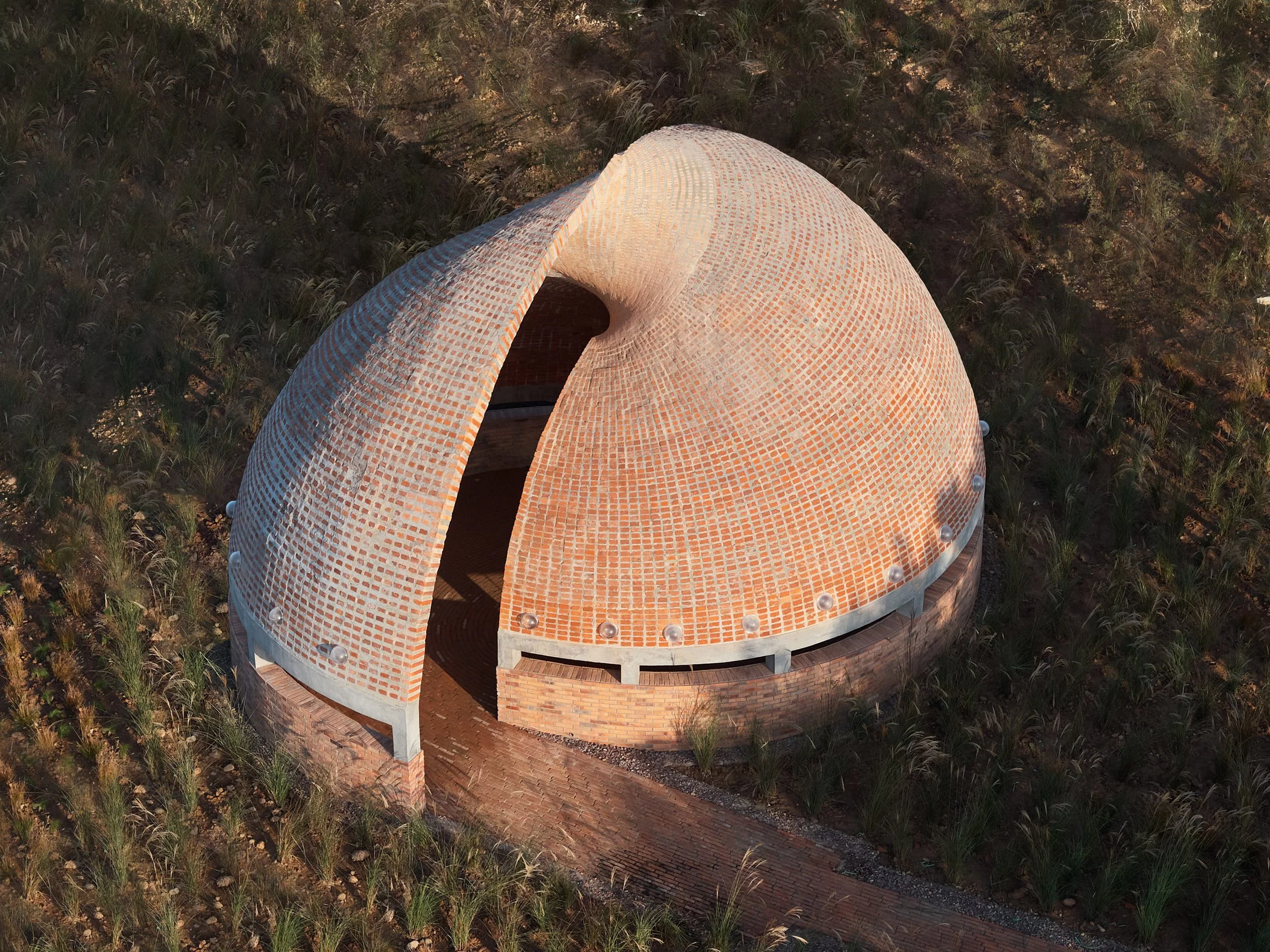
Designed by HCCH Studio, the Twisted Brick Shell Library features a unique shape formed by two hemispherical sections, linked by a twisting wall of steel and concrete. This distinct pavilion serves as a serene reading space, inviting visitors to engage with both literature and the scenic farmland. The combination of curves and materials challenges conventional perceptions of libraries, promoting them as spaces not just for solitary study but for community interaction—something that could redefine how library spaces are utilized in rural settings.
The Anthill, Maharashtra, India
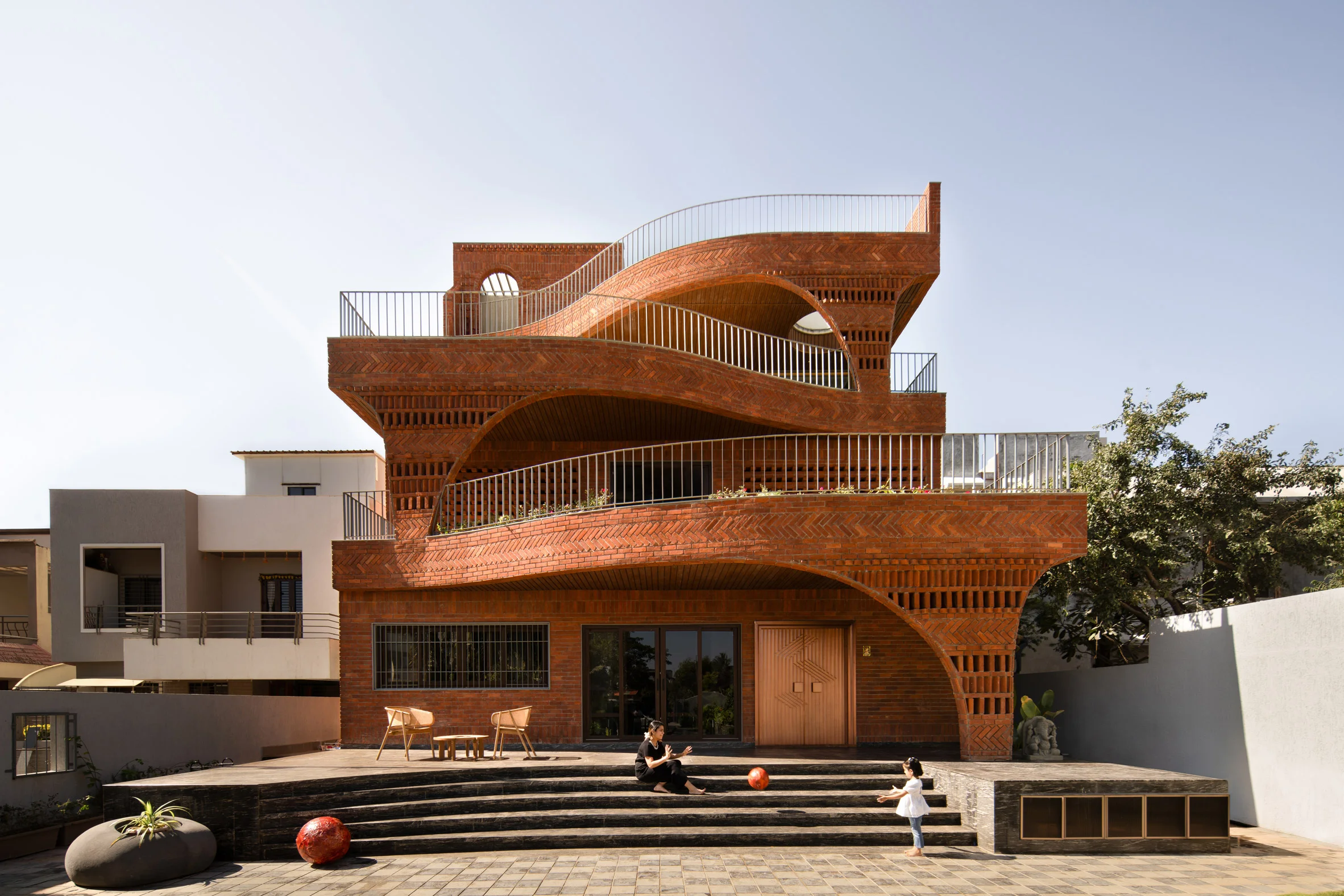
Inspired by the natural structures of anthills, Kaushal Tatiya Architects crafted a residence that features three curved balconies. The textured brick façade incorporates perforated elements to enhance ventilation, allowing natural light to filter inside, creating a comfortable living space. This design not only reflects the creativity of the architects but also embodies a dialogue with nature—showcasing how architecture can borrow from biological systems. The Anthill stands as a testament to how human habitation can integrate more harmoniously into its environment.
W-Mission Headquarters, Seoul, South Korea
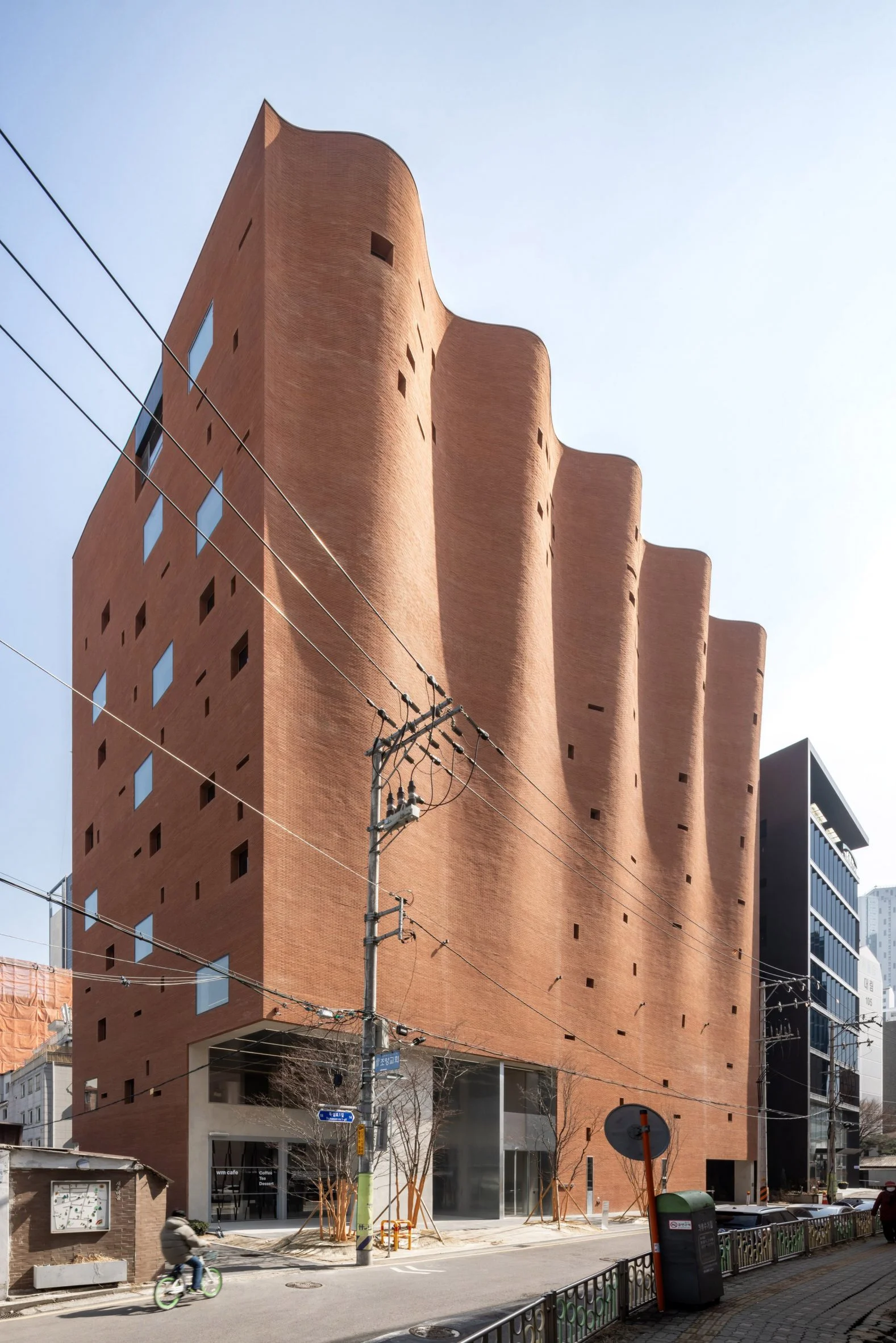
The headquarters for W-Mission, designed by Behet Bondzio Lin Architekten and BCHO Architects, features a red-brick wall that gradually transitions into dynamic forms. This seven-story building cleverly integrates office space with public areas, including a café and workshop facilities, demonstrating how architectural design can foster interaction and community. The inclusion of public access areas encourages a blend of work and leisure, positioning the headquarters not merely as a workplace but as a hub for community collaboration.
A Serpentine Pavilion, Kensington Gardens, London, UK
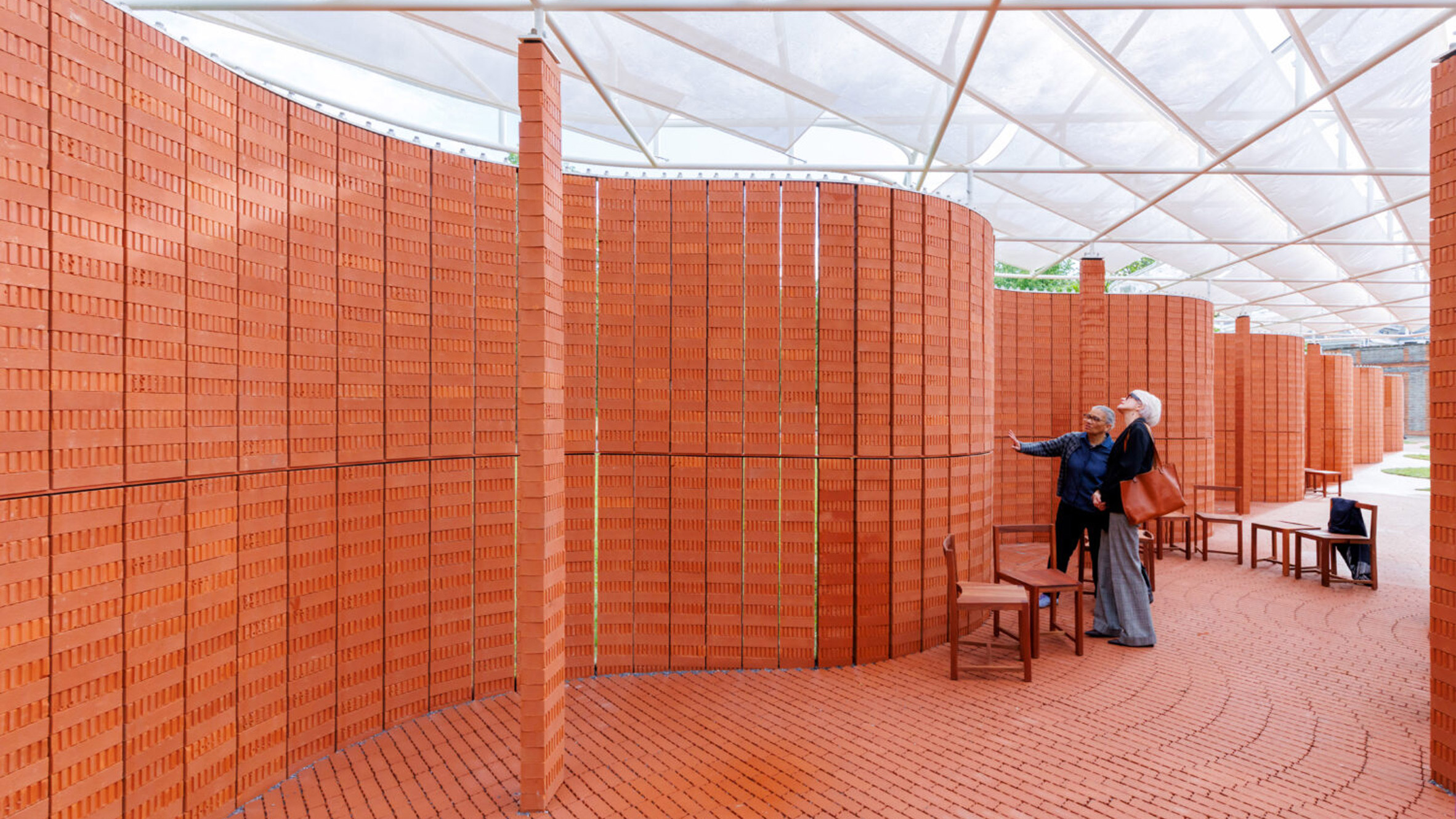
The Serpentine Pavilion, created by Lanza Atelier, features a sinuous, mortar-free brick wall. This design nods to traditional English crinkle-crankle walls and emphasizes sustainability through disassemblable construction methods, showcasing an inventive approach to contemporary architecture. By exploring sustainable practices, this pavilion serves both functional needs and environmental considerations, pointing the way toward a more eco-friendly architectural practice.
Haikou Gaoxingli Insun Cinema, China
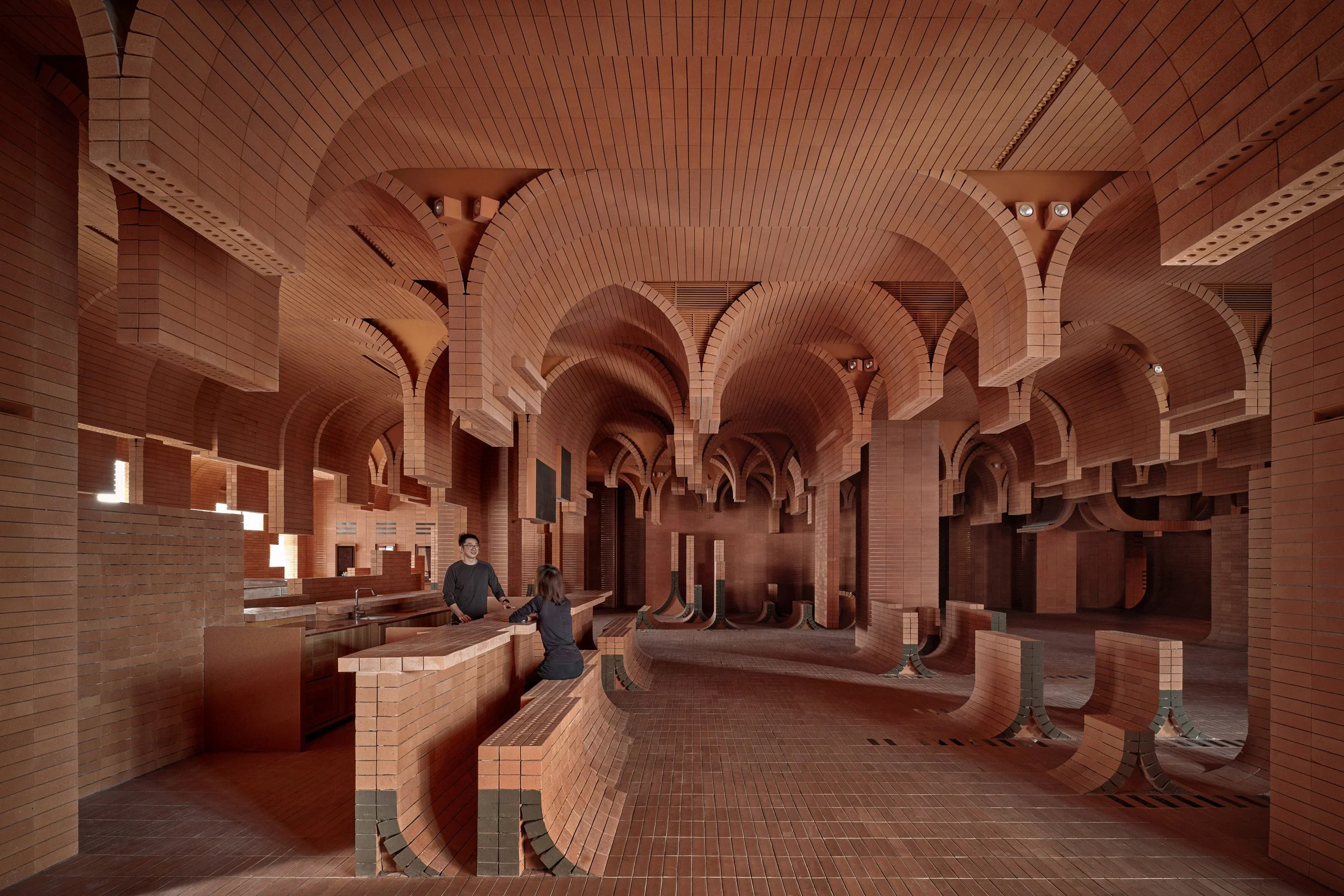
In Haikou, Chinese studio One Plus Partnership transformed a cinema lobby with curved red-brick features, creating sculptural forms such as tables and reception counters that evoke the ocean's undulating waves. This design melds functionality with artistry, enhancing the visitor experience and elevating the mundane cinema outing into something more memorable. By crafting spaces that stimulate the senses, it invites cinema-goers to interact with their surroundings in new ways.
The Scoop, London, UK
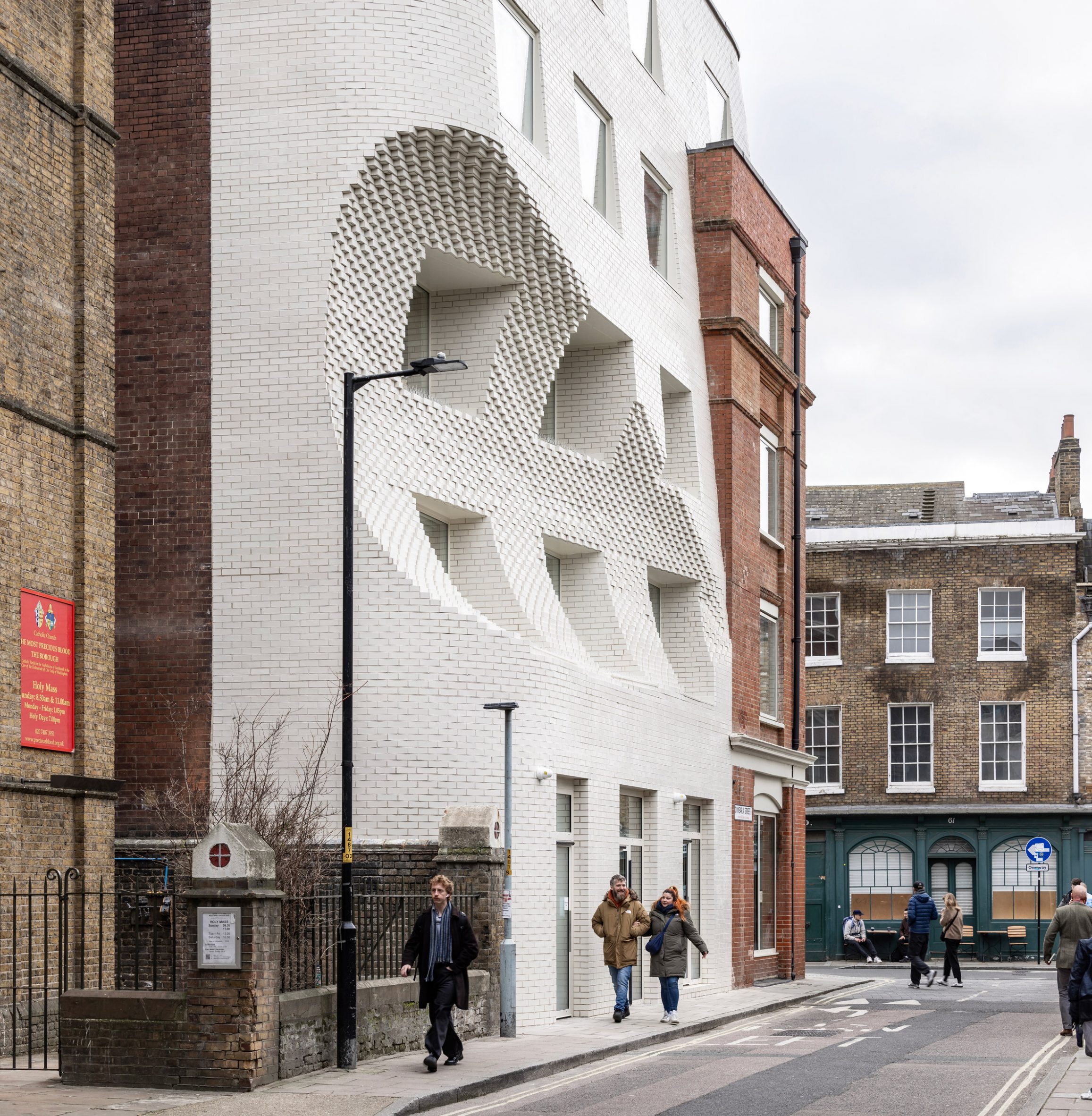
Corstorphine & Wright designed The Scoop, an office extension in London that features a unique façade with a large, rounded cutout. This clever design highlights a neighboring Grade II-listed church and incorporates pixellated brickwork to create visual interest and cohesion with the surroundings. Such design choices encourage a sense of conversation between the old and new, allowing history to intertwine with contemporary functionality.
Shah Muhammad Mohshin Khan Mausoleum, Bangladesh

Designed by Sthapotik, this mausoleum in Bangladesh features cylindrical skylights and turrets wrapped around a square foundation. The careful perforation of bricks allows for airflow, blending traditional forms with a mindful integration of natural light. This integration not only serves functional purposes but also represents a deeper philosophical perspective on life, death, and nature’s cycle—something that resonates deeply in cultural architecture.
GjG House, Ghent, Belgium

The GjG House, crafted by BLAF Architecten, utilizes reclaimed bricks to form its flowing walls, strategically avoiding the disruption of existing trees on the site. The design’s curvature not only enhances outdoor aesthetics but also creates inviting interior spaces for living. This house exemplifies how modern architecture can prioritize sustainability by reusing materials, encouraging a shift in how homeowners view their resources.
Future Outlook: The Evolution of Curved Brick Architecture
The movement towards curved brick architecture isn't just a fleeting trend; it's an evolving response to the demands of modern living and environmental consciousness. As architects experiment with materials and form, we could see a broader shift in commercial and residential design principles. What this means for you, if you're working in this space, is that traditional constraints could soon be a thing of the past. As techniques improve and sustainable practices become standard, brickwork may stop being seen as merely a construction material, transforming into an expressive medium in the hands of skilled architects. This evolution is more significant than it looks—reflecting both a design philosophy and a growing recognition of the built environment's role in community building.