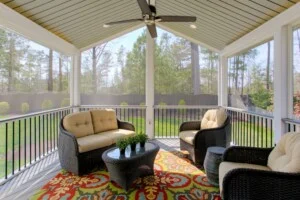
Winter usability outside comes down to a few practical details: a dry place to sit, protection from wind, reliable light and a safe way to add warmth. That mix looks different in Boulder, Seattle and Boston, but homeowners don’t need to convert an entire deck or yard to make outdoor living possible through colder months. One well-planned seating area can carry much of the benefit.
Climate changes the order of priorities. A deck near Boulder, CO, may need a clear route through snow and shelter from strong winds. In Seattle, WA, persistent damp calls for dry storage and materials that handle moisture. A home in Boston, MA, may benefit from a sunny, wind-sheltered corner on a crisp day. The common thread is to solve the conditions that keep people indoors before adding decorative touches.
Design around one sheltered spot
Start with a compact seating area close to the house. A spot that catches afternoon sun and sits out of the prevailing wind is easier to use, heat and maintain than a large, exposed patio. Colin Davies of Security Pacific Real Estate recommends planning for short weather breaks in the East Bay, with seating positioned under cover where possible.
Davies suggests keeping quick-drying cushions and warm throws close to the back door, ready to bring outside when conditions improve. That simple routine makes a difference in a region where rain can interrupt outdoor use. Soft, outdoor-rated lighting around chairs and along the route indoors also helps the area work as daylight fades.
A porch roof, awning or pergola can provide a dry starting point. Where adding cover isn’t practical, the house itself may offer some shelter: a corner beside a wall can reduce exposure to wind. Keep the walkway to the seating area clear, since even a comfortable patio won’t see much use if reaching it means crossing snow or ice.
Make shelter and drainage do the heavy lifting
In snowy regions, rooflines, drainage and the entry path are part of the outdoor living setup. Hillary Johnson of SmartPads points to heavy snowfall, strong winds and freezing temperatures in the Rocky Mountains as conditions that make covered entries and proper drainage especially useful.
Water needs a clear route away from the seating area and the house. If runoff pools near steps or freezes on the path, it can make the space harder to access just when a clear winter day invites people outside. Covered entries and rooflines that direct water away from doorways help keep that route more usable.
These exterior choices sit alongside the home’s indoor comfort. Johnson also highlights insulation, airtight construction and radiant heating as features that support warmth and energy efficiency inside. For the patio itself, the immediate priorities remain shelter from precipitation, a dry approach and a place where seating can stay ready between storms.
More on yard drainage solutions can help homeowners think through how water moves around the property.
Match wind protection with the heat source
Heating an open patio can be inefficient when wind carries warmth away. Shaina McAndrews, team leader of the Shaina McAndrews Team at eXp Realty, describes Greater Philadelphia winters as often damp and raw rather than defined by heavy snow. For that kind of weather, clear vinyl curtains on a covered porch or pergola can reduce the breeze while keeping the view open.
McAndrews favors infrared heat for exposed settings because it warms people directly instead of trying to heat the surrounding air. She also recommends following the sun: seating near a brick or stone wall can benefit from afternoon light and the warmth those materials retain. In practice, a good location may reduce how much supplemental heat the space needs.
Electric, propane, tabletop and infrared heaters suit different layouts, as do outdoor fireplaces and chimineas. The right choice depends on how open or enclosed the area is. Check the manufacturer’s instructions for outdoor ratings, ventilation and clearance from furniture, curtains and other materials. Those checks matter even more if a porch is partly enclosed. Local fire rules and HOA rules may also affect which features are suitable.
A fire pit can anchor a gathering area, but it belongs in an open location away from buildings and overhead cover. The point is to make warmth part of the layout from the start, rather than squeezing a heat source into a space without room for it.
Use light and textiles to extend the evening
Short winter days make lighting more than a finishing detail. String lights can trace a porch edge or hang above a seating group, while a ceiling fixture can brighten a covered area. Steps and walkways need their own low, warm lighting, especially when wet or icy conditions make a dark entry difficult to navigate.
An indoor-outdoor rug softens concrete or deck boards underfoot and can give pets a more comfortable place to rest. Choose materials that dry quickly. For throws, McAndrews recommends wool or performance fabrics over cotton, which can become waterlogged in humid conditions. Keep textiles stored inside or in a sheltered container between uses so they’re ready when the weather clears.
Lighting and soft layers can make a space feel more inviting, but they don’t replace drainage or a safe route to the door. The strongest setup combines comfort at the chairs with visibility and traction where people walk.
For ideas on arranging outdoor zones, see these outdoor living space design tips.
Protect furniture and keep the space looking lived in
Rain, ice and repeated freeze-thaw cycles can wear down outdoor furniture. Weather-resistant seating is a sensible starting point; fitted covers help keep pieces clean and dry between uses. Wipe furniture down before storing it, and move cushions or lightweight items into a garage or shed when conditions turn rough.
Barrett Sotheby’s International Realty notes that fire pits, weather-resistant seating, blankets and patio lighting can make New England outdoor areas inviting in crisp weather. Covering furniture between outings also helps extend its useful life. These are straightforward upkeep steps, but they matter when furnishings remain outdoors through a long winter.
Plan storage into the layout. Cushions that need to be carried through the house after every use are less likely to come out often; a convenient indoor spot near the door or a sheltered storage option makes the routine easier. A yearly home maintenance schedule can help incorporate furniture care into seasonal tasks. Homeowners can also review these house winterization tips alongside outdoor preparations.
Planters can keep a porch from feeling closed for the season. Small evergreens, hardy ivy and other cold-tolerant plants can fill pots through winter. In milder areas, pansies and violas may work as well. Many potted evergreens can be transplanted into the yard in spring, extending their use beyond the colder months.
A practical winter setup
- Choose one compact seating area, ideally near the house and out of the wind.
- Check for cover, drainage and a clear, well-lit route to the door.
- Use curtains, screens or the wall of the house to reduce wind exposure.
- Select a heater or fire feature suited to the space, and follow product instructions and local rules.
- Add lighting at the seating area, steps and walkways.
- Use a quick-drying rug, weather-ready cushions and suitable throws.
- Cover furniture between uses and store cushions when weather turns severe.
- Refresh planters with evergreens or other plants suited to local winter conditions.
The most useful winter patio upgrades are the ones that remove friction: a dry place to sit, a path that stays accessible, light after sunset and warmth that suits the setting. For many homes, a small protected corner will get more use than a larger space left exposed. Once that spot works, its design can guide any later improvements to the rest of the outdoor area.
Winter patio questions
What’s a low-cost way to make an outdoor space more comfortable?
Start with the location and soft layers. Moving chairs into a sunny, sheltered spot costs nothing, while blankets and an indoor-outdoor rug add comfort without installing a heater. Keeping cushions dry also makes the seating more inviting when a clear window opens.
Can a heater be used on a covered porch?
That depends on the heater and the porch. Check that the equipment is rated for covered outdoor use, follow ventilation and clearance instructions, and keep it away from fabrics and furniture. Revisit the guidance if curtains or other materials enclose the area.
How can outdoor cushions stay dry?
Quick-drying cushions and sheltered storage help limit moisture. Bring cushions into a garage or another protected place when they aren’t in use, and cover furniture between outings to reduce exposure to rain and snow.
Is a fire pit suitable for a deck or patio?
Placement requirements vary. The guidance provided here recommends an open area away from structures and overhead cover. Check the product instructions and local fire rules for the specific setup.
Which plants can handle winter in porch planters?
Small evergreens and hardy ivy are options for many winter planters. Pansies and violas may suit milder climates. Regional growing guidance can help identify plants suited to local temperatures.


