Every neighborhood has a house that stops you mid-stride. A steep roofline sweeps down over a round wooden door, and a chimney tilts as if it's leaning in to share a secret. That's a storybook house, and it's the reason these properties keep turning up in listing photos and open-house conversations. They appear in places as different as Carmel-by-the-Sea and Los Angeles, where the style first took hold. For buyers and sellers, the house is less a trend than a specific product with its own rules around layout, maintenance and demand.
What separates a storybook house from a cottage
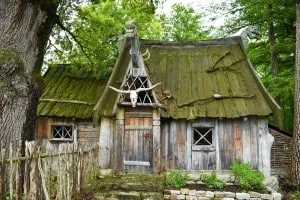
A storybook house is designed to look like a fairy tale stepped out of English and European countryside folklore. People also call them fairy-tale cottages or Hansel and Gretel houses. Plenty of these homes share DNA with cottage-style homes, but the storybook version pushes every detail further. The result is a property with a handcrafted, almost theatrical presence that reads more like a character on the block than a generic address.
Size is a tendency, not a requirement. Most storybook homes are small to mid-sized, yet the style is defined by whimsy rather than square footage. When you're evaluating one, don't let the modest footprint lead you to assume it's a simple cottage. The design choices are where the value sits.
Where the look came from
The storybook look took shape in 1920s Southern California, and Hollywood did much of the heavy lifting. Set designers and art directors were already building old-world cottages for the screen, and that imagination migrated into residential design. The Spadena House is the best-known example. It was built in 1921 as an office for a film studio, then moved to Beverly Hills, where its crooked, witchy silhouette still pulls in visitors.
Around the same period, builder Hugh Comstock started putting up playful cottages in Carmel-by-the-Sea. His first tiny home was designed to showcase his wife's handmade dolls. Those cottages became a local signature, and the idea spread to other pockets of the country. Today you'll find original storybook homes from that era alongside new builds that borrow the same vocabulary. Many designs also draw on Tudor style houses, which share the steep rooflines and arched doorways that define the look.
The features that define the style
No two storybook houses are identical, but a handful of details recur across the category:
- Steep, dramatic rooflines. Look for steeply pitched gables and rooflines that curve or roll at the edges, sometimes meant to mimic thatch.
- Arched doors and windows. Rounded, often oversized entryways and arched windows soften the exterior.
- Mixed natural materials. Brick, stone, stucco and timber are commonly layered together on a single facade.
- Asymmetry. Rooms and rooflines jut out at different angles, giving the house an organic, grew-over-time feel.
- Decorative windows and trim. Diamond-paned or leaded glass and carved wood details reinforce the handcrafted look.
- Storybook chimneys. Chimneys are often tall, tapered or purposefully crooked.
The exaggeration is what sets the style apart. Audrey Leavitt of Charmed Playhouses and Storybook Resorts, whose company builds storybook-inspired structures, puts it simply: "A storybook house exaggerates details a normal home keeps restrained. Steeply pitched rooflines, exaggerated arches, and crooked chimneys or walls built with intentional crookedness are all features of the storybook homes we build. We also add details you rarely see elsewhere, including thatched roofs, diamond-paned windows, and hand-carved trim."
Living inside a storybook home
The character continues past the front door. Inside, these homes often have cozy rooms, built-in nooks, exposed beams, and ceilings that rise and dip with the roofline. Some floor plans feel wonderfully quirky. Others feel tight or chopped up by modern standards, particularly for buyers who want open living space. Walk through with that in mind. Picture where the sofa goes, how the rooms connect, and whether each odd angle is charming or simply inconvenient for how you actually live.
That tension explains why many people drawn to the style choose to build new instead of buying a century-old original. Greg Nanula of Essex Homes of WNY says the planning stage is where a home starts to feel personal. "Being a semi-custom homebuilder, this is the fun part of our job: creatively working with customers to customize the spaces of their new home that are important to them to attain 'Dream-Home Status.' It all starts with defining desired room sizes and proper floorplan flow to ensure it all meets our customer's level of comfort. That carefully planned layout paves the way so our customers can layer in their desired finishes, with the assistance of professional designers of course, resulting in a home that 100% reflects their needs and style."
Upkeep is where the charm gets expensive
A home with this much character comes with extra to-dos. Complex rooflines mean more valleys, flashing and seams where water can find a way in. Wood trim and decorative details need regular attention. Specialty materials, such as handmade glass or rolled-edge roofing, can be harder and pricier to repair than standard components. Older storybook homes also tend to carry the hidden issues common to older construction, including original wiring, plumbing and insulation that haven't kept pace with modern standards.
If you're considering an existing home, or already own one, a few steps matter more than the rest:
- Schedule a thorough roof inspection, paying close attention to valleys, dormers and chimneys.
- Ask about past repairs to windows, trim and exterior finishes.
- Find contractors with experience in older or custom homes, since not every crew is comfortable with unusual rooflines.
- Check insulation, HVAC and electrical updates, particularly in homes built decades ago, and consider specialty home inspections if the house has older systems.
Newer builds can deliver the look without some of those legacy problems. Jennifer Nettles of Epic Homes argues that the trick is pairing the design with modern know-how. "What makes a storybook home so special is its character – steep, distinctive rooflines, arched entryways, charming windows, and beautiful combinations of brick, stone, and natural materials. As a custom home builder, I believe the key to creating this timeless style is balancing unique architectural details with modern building techniques, energy efficiency, and practical maintenance. With thoughtful design and craftsmanship, homeowners can capture that fairytale charm while enjoying the comfort and functionality of a modern home."
Buyer appeal and resale in a niche market
Storybook houses tend to build a loyal following. Their curb appeal is hard to beat, and a distinctive exterior stands out in listing photos and draws attention at showings. The flip side is that the style is a niche one. The buyer pool is likely smaller than it would be for mainstream home styles, and a quirky layout or heavy upkeep can make some shoppers hesitate. That combination of strong attraction and narrower demand is what makes pricing and presentation so important.
Several factors tend to shape how a storybook home performs when it's time to sell:
- Condition: Well-maintained roofs, windows and exteriors go a long way toward reassuring buyers.
- Authenticity and craftsmanship: Original details and quality materials are often what buyers are paying for.
- Location: Storybook homes can be especially prized in neighborhoods where the style is part of the local identity. Carmel-by-the-Sea is the clearest example, since the look there is tied to its history.
- Updates: Modernized kitchens, baths and systems help buyers fall for the charm without worrying about everything else.
Cindy Stumpo of C Stumpo Development says lasting appeal comes down to fundamentals. "A storybook house should make you stop in your tracks outside and feel right at home the second you walk through the door. That takes more than charm – it takes beautiful proportions, quality materials, and craftsmanship in every detail."
If you're weighing a purchase, a local agent who knows how storybook and similar character homes sell in your area can give you a realistic read on comparable sales, buyer demand and how long a unique property may take to find the right owner.
Is a storybook house the right fit?
A storybook house isn't for everyone. For the right buyer, though, it's the kind of home that doesn't feel dated the way many properties do. Study the roofline, the materials and the craftsmanship. Then weigh that charm against the upkeep and the layout. If you want to come home to a place that feels like it belongs in a story, and you're prepared to look after it, the search is worth the effort. Watch the neighborhoods where the style is part of the identity, since that's where the look is most likely to hold its own in a crowded market.