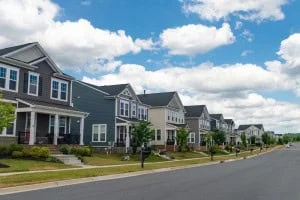
A cluster of newly built homes can change how buyers and appraisers read an established street, but a higher sale price for a new home doesn’t automatically lift the homes around it. The effect depends on what has been built, how it fits the block, and whether local demand can absorb the added supply. For homeowners and buyers in markets such as Indianapolis, IN, and Sacramento, CA, recent nearby sales offer a firmer guide than assumptions about construction alone.
Read the project against the local market
New development arrives within a market already moving for its own reasons. Redfin reported a U.S. median home sale price of $388,613 for the four weeks ending Nov. 8, down 0.9% year over year. It marked the fourth consecutive week of annual declines. A broad price shift can affect nearby sales at the same time as a new project, making it difficult to attribute every change to the construction.
That distinction matters when judging whether a project has supported or weakened surrounding values. A neighborhood’s prices might rise alongside the wider housing market, even if new homes made little difference. Or the local market may soften while a well received project helps the immediate area hold buyer interest. Comparing nearby results with the broader trend can help separate those forces.
Design and fit influence buyer response
Scale, materials, construction quality, and density affect how new homes sit within an established neighborhood. A carefully designed home that fits the street may draw buyers to the area and provide new comparable sales. A project that feels oversized, crowded, or architecturally out of place may have the opposite effect on perceptions of neighboring homes.
Jez Alogla, founder of Alogla Homes, says a project’s impact depends on its location, design, price point, supply and demand, density, and connection to the existing community. He points to potential pressures such as increased traffic, inadequate infrastructure, reduced privacy, and homes that don’t match the surrounding market.
The street-level relationship is especially important for older properties. A new home’s sale price may set a fresh reference point, but buyers still weigh differences in age, floor plan, finishes, and condition. If the new property offers features that older homes lack, its price may not translate directly into higher values for those homes.
The Design First Builders Team similarly emphasizes whether a new property matches the scale and character of its block. In its view, good construction and durable materials can help a home hold appeal, while short lived finishes can date quickly. A much larger or denser building can also make nearby homes seem smaller or less current, even if the new property sells at a strong price.
New supply creates both competition and new reference points
Additional homes increase the number of properties available to buyers. That can give shoppers more choice and create competition for existing listings. At the same time, new development may attract attention to an established neighborhood, particularly among buyers seeking modern layouts, energy efficiency, or updated amenities.
Michelle Chaney, finance director at Zeilman-James Homes, Inc., notes that new residential construction can bring renewed buyer interest and establish additional price points. Those sales can inform later comparisons, but differences in features, age, and quality need to be accounted for. Whether new construction supports surrounding values ultimately depends on demand, market conditions, and how the project complements the community.
For agents and appraisers, comparable sales, often called comps, are a practical starting point. They are recent sales of similar nearby homes used to assess a property’s price range. An appraisal is a professional estimate of a home’s value and often draws on comparable sales as well. A newly built home can be relevant evidence, but it may require careful adjustment when its size, condition, or features differ from older homes nearby.
What to check before drawing a conclusion
Start with sales close to the project and compare homes with similar characteristics. Include both new and existing properties where possible, then look at their prices, sizes, and features. One transaction alone is unlikely to establish a neighborhood trend; a sequence of sales gives a more useful picture.
- Review recent sales of similar nearby homes alongside completed sales in the new development.
- Compare price points, home sizes, and features with the surrounding housing stock.
- Find out how many additional homes are planned and when construction is expected to proceed; the builder or local planning office may have details.
- Check whether the project is associated with road, utility, or zoning changes through local planning or permitting offices.
It also helps to compare local sales with wider market movement over the same period. If prices have shifted across the city or region, that context can keep a broad market change from being mistaken for a project-specific effect. An agent familiar with the area can help assemble relevant sales and explain how the homes compare, though no single comp answers every valuation question.
What buyers and owners should take from the change
For buyers, newly built homes can broaden the available choices and offer a useful reference for nearby listings, but the asking or closing price of a new property shouldn’t be treated as a direct valuation of an older one. For existing owners, a project’s design and market reception may shape buyer perceptions, while added supply and local infrastructure pressures can also matter.
The most reliable reading comes from the details: the quality and fit of the homes, the price range they serve, the number of units added, and the direction of comparable sales. Those details show whether construction is bringing new demand into the area, creating direct competition, or simply arriving during a wider market shift. In the end, the next set of nearby sales will provide the clearest evidence of how the neighborhood is responding.


